
The Science of Ozone Washing & Fresh Cut Preparation
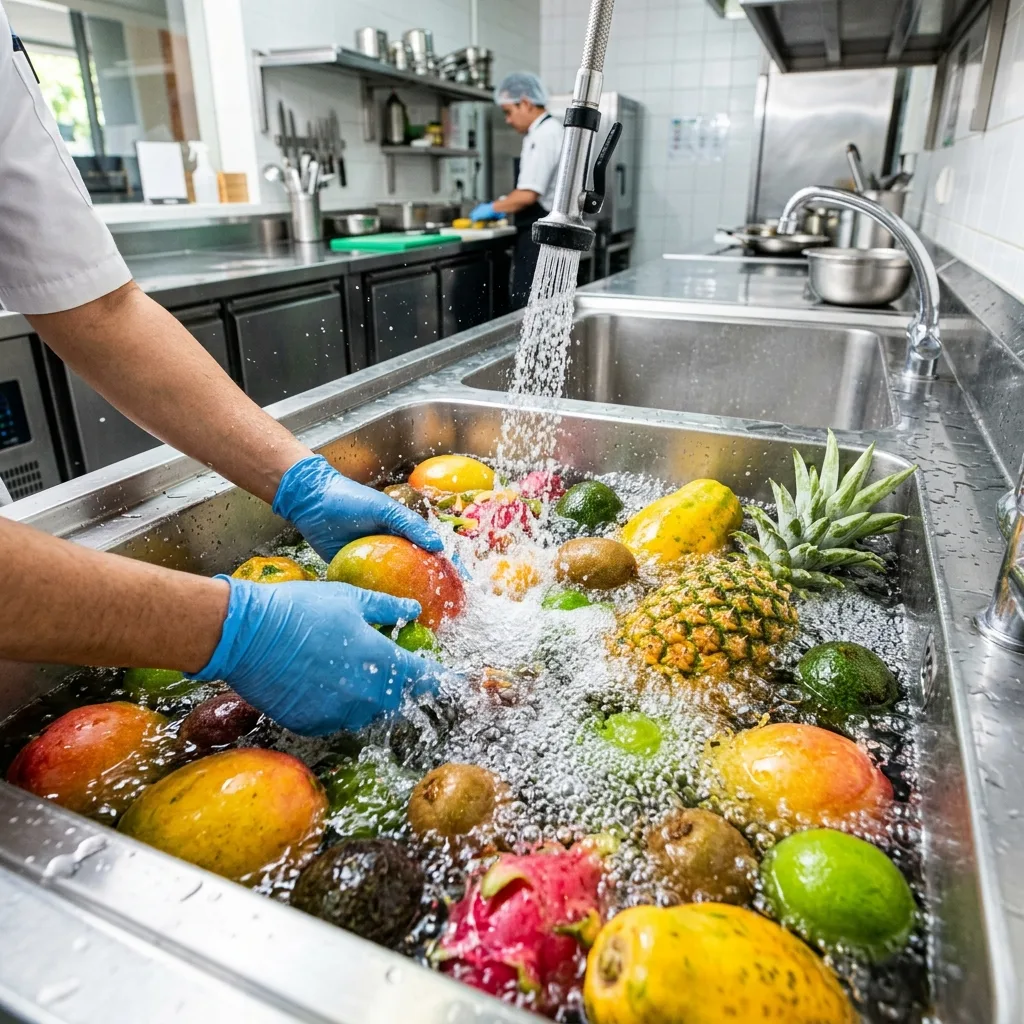
Food safety and hygiene are non-negotiable when you are dealing with raw, ready-to-eat fruit.
At Bowlmingo, we take clean eating a step beyond plain tap water washing.
This guide explains what ozone washing actually is, how it works inside our Omalur kitchen, and why it matters for every bowl we prepare.
Key Takeaways
- Ozone is a naturally occurring gas that breaks down into oxygen after use, leaving no chemical residue.
- Ozonated water removes surface pesticide residue and bacteria far more effectively than plain tap water alone.
- We never use sugar syrup, anti-browning chemicals, or artificial preservatives on any fruit.
- Fruit is cut only after your order is placed, then packed by gloved staff for delivery the same morning.
What Is Ozone and Why Use It on Fruit
Ozone, written as O3, is a naturally occurring gas made of three oxygen atoms instead of the usual two.
That extra oxygen atom is unstable. It wants to break away, and when it does, it oxidizes whatever it touches.
On a microbial level, that oxidizing action damages the outer wall of bacteria and breaks down surface pesticide residue.
Once it has done that work, ozone reverts back into ordinary oxygen. Nothing artificial is left behind on your fruit.
How Ozone Washing Actually Works, Step by Step
- Generation. An ozone generator converts a stream of oxygen into ozone gas.
- Infusion. That gas is dissolved into purified water, creating ozonated wash water.
- Immersion. Whole, uncut fruit is submerged in the ozonated water for a set contact time.
- Oxidation. Ozone molecules break down surface residues and disrupt bacteria on contact.
- Reversion. Ozone naturally converts back into oxygen, leaving no chemical trace on the fruit.
This entire process happens before a single knife touches the fruit, every single morning in our kitchen.
What Ozone Washing Removes
Ozonated water works on the fruit's surface, where most contamination actually sits:
- Pesticide and chemical residue left over from farming and transport.
- Surface bacteria picked up from handling, soil, and open-air transport.
- Dust and grime, especially on textured skins like grapes or pomegranate.
- Odor-causing compounds, since ozone breaks these down rather than masking them.
This is a surface-level treatment, not a substitute for sourcing quality fruit in the first place. Ozone washing works best as one layer in a larger hygiene process, which is exactly how we use it.
Ozone Wash vs. Plain Tap Water
Rinsing fruit under a tap does remove loose dirt. It is a reasonable baseline.
But plain water has no active disinfecting property of its own. It moves debris around rather than breaking it down.
Ozonated water goes a step further. The oxidizing action of ozone actively disrupts residue and bacteria on contact, instead of relying on rinsing alone.
Ozone Wash vs. Chemical Sanitizers
Some commercial kitchens use chlorine-based or other chemical sanitizing solutions instead.
Ozone offers a different trade-off:
- No chemical residue to rinse off afterward, since ozone reverts to oxygen on its own.
- No added taste or smell transferred to the fruit.
- No chemical storage or handling risk in our kitchen.
This is why we chose ozone as the foundation of our wash process, rather than a chemical alternative.
Inside Our Dark Kitchen Process
Every bowl follows the same four-stage journey before it reaches your door.
- Sourcing. Whole fruit arrives fresh from verified orchards around Salem, sourced early each morning.
- Ozone wash. Every piece of fruit goes through our ozonated water wash before any cutting begins.
- Hand-cutting. Fruit is cut and portioned only after your order is confirmed, never in advance.
- Gloved packing. Trained staff pack each bowl by hand, wearing gloves throughout.
You can see how this timing connects to delivery in our delivery schedule guide.
Cutting fruit exposes its flesh directly to air and any surface bacteria that survived the wash. Washing before cutting, not after, is what actually protects what ends up in your bowl.
Why We Never Use Sugar Syrup or Anti-Browning Chemicals
Some cut-fruit vendors soak pieces in sugar syrup or a chemical anti-browning dip to extend shelf life.
Both approaches solve a shelf-life problem, but they solve it by adding something to your fruit that was never there to begin with.
We take a different approach. Because we cut only after you order, and deliver the same morning, we do not need to extend shelf life artificially.
What you get is 100% natural fruit, exactly as it tasted before it was cut, with zero added preservatives.
What Is a Dark Kitchen, and Why We Use One
A dark kitchen is a preparation facility built only for order fulfillment, with no dine-in seating or walk-in counter.
Because there is no customer-facing floor to manage, the entire space can be designed around one goal: hygienic, efficient food prep.
Our Omalur dark kitchen is set up exactly this way. Every station, from ozone washing to cutting to packing, follows a fixed layout and sequence.
This structure is also what makes a consistent hygiene process realistic to maintain every single day, not just occasionally.
Common Myths About Ozone Washing
Myth: Ozone water leaves a chemical taste behind
Ozone breaks down back into oxygen shortly after use. There is no lingering chemical compound left to taste.
Myth: Washing fruit removes all the need for good sourcing
Washing is a surface treatment. It works best paired with quality sourcing from verified orchards, not as a substitute for it.
Myth: More ozone exposure is always better
Contact time is calibrated deliberately. Over-exposure can affect fruit texture, so our process uses a controlled duration rather than maximum exposure.
Hygiene Standards Beyond the Wash
Ozone washing is one part of a larger hygiene system, not the whole story:
- Gloved prep handling at every stage after the wash.
- Cold-chain packing to keep bowls chilled from kitchen to doorstep.
- Zero preservatives, meaning nothing artificial is added to extend shelf life.
- Fixed morning cutting, so fruit is never held cut overnight.
You can see all four of these commitments summarized on our About page.
Where Ozone Washing Fits in Food Safety Practice
Ozone treatment is not unique to fruit kitchens. It is a recognized disinfection method used across parts of the food and beverage industry.
Bottled water plants, seafood processors, and produce packing facilities all use variations of the same oxidizing principle to manage surface contamination.
We adopted it for the same reason those industries did: it is effective, leaves no chemical residue, and fits a kitchen that prepares food fresh every day.
Quality Checks After Washing and Before Packing
Washing is not the last checkpoint in our process. Before any bowl is sealed, our kitchen team checks for:
- Visual quality, rejecting any piece with bruising or spoilage.
- Neat packing, so every bowl looks and arrives the way it should.
- Correct fruit mix, matching exactly what you ordered.
- Secure packaging, so the lid seals properly before your rider picks it up.
Ozone washing removes what you cannot see. This final check catches what you can.
Is Ozone-Washed Fruit Safe to Eat?
Yes. Ozone is widely used in food processing precisely because it disinfects effectively without leaving chemical residue behind.
It is used at controlled concentrations and contact times designed for food surfaces, not the stronger concentrations used for industrial water treatment.
This article explains our process for transparency. It is general information about our kitchen practices, not a medical or regulatory claim. For official food safety guidance, refer to FSSAI's published food safety standards.
How to Tell Fresh-Cut Fruit From Fruit That Sat Too Long
Even with a good wash process, freshness ultimately comes down to timing. A few visual cues can tell you a lot:
- Color at the cut edge. Freshly cut fruit looks bright and moist. Fruit that has sat too long starts to brown or dull at the edges.
- Liquid pooling. A small amount of natural juice is normal. Excess liquid pooling at the bottom usually means the fruit was cut well in advance.
- Firmness. Fresh-cut pieces hold their shape. Fruit that has been sitting starts to soften and lose structure.
- Smell. Fresh fruit smells clean and mild. A sour or overly sweet fermented smell is a sign it sat too long.
Because we cut after your order and deliver the same morning, this is one of the easiest ways to notice the difference for yourself.
Frequently Asked Questions
Does ozone washing change how the fruit tastes?
No. Ozone leaves no odor or taste behind because it reverts to ordinary oxygen shortly after use. Your fruit tastes the way it naturally does.
Is ozone washing better than peeling the fruit instead?
Peeling removes the skin entirely, which also removes fiber and nutrients close to the surface. Ozone washing lets us keep more of the fruit intact while still addressing surface hygiene.
How long is fruit washed in ozonated water?
Contact time is calibrated per batch in our kitchen, long enough for the oxidizing effect to work, without over-soaking the fruit or affecting texture.
Do you wash fruit again after cutting?
No. Washing happens before cutting, while the fruit is still whole. Washing after cutting would rinse away exposed flesh and reduce freshness, so the order matters.
Is this the same as the ozone water some home purifiers use?
The underlying gas is the same, but our kitchen system is built and calibrated specifically for commercial food-surface washing, at a different scale and contact time than a home appliance.
Why not just soak fruit in salt water instead?
Salt water can help loosen surface dirt, but it does not have the same oxidizing action on pesticide residue and bacteria that ozonated water does. We use ozone specifically because of that added effect.
Can I see this process in person?
We are not currently set up for public kitchen visits, since our dark kitchen model has no customer-facing floor. We aim to share more behind-the-scenes photos and detail here as our kitchen documentation grows.
Ozone washing is a small, invisible step in your bowl's journey. But it is one we treat as essential, every single morning, for every single order.
Want to taste the difference? Browse our fresh fruit bowl menu and order a bowl prepared with this exact process.
Ready to Order Your Fresh Bowl?
Place your order 24/7 online. We deliver on the next scheduled delivery day, Monday to Saturday between 10:00 AM and 1:00 PM, in Omalur.